Why People Keep Confusing Deepfakes With Fictional AI-Generated Content
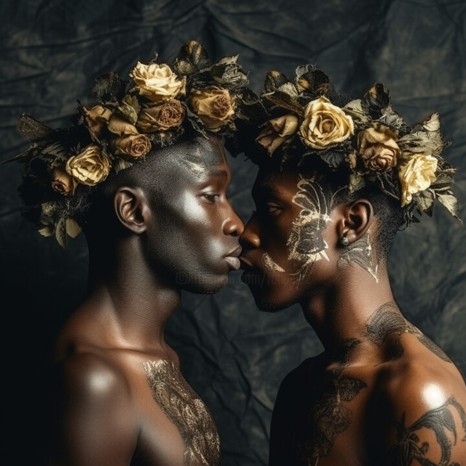
AI is now creating imagery and video better than ever before.
Only a few years ago, we saw this type of artificial creation in tech demos and research. Now you see AI-created content everywhere – social media, news, forums, etc., and in addition to that, even on some form of artistic platform.
With so much created using AI, the lines of what makes something "the same" have become blurred. So, someone creates their own fantasy character.
Someone creates an artist's rendition of a concept image from one of their stories.
Someone fakes a celebrity's video.
Many times, these types of content get called "deepfakes." However, they are not the same thing. And there will be consequences if more people do not learn to distinguish between them.
AI-Generated Doesn't Automatically Mean Deepfake
When people hear the word AI, they often focus on the technology itself.
That makes sense.
The technology is new, impressive, and changing quickly.
But the more important question is usually what the technology is being used for.
A generated image of an original character is one thing.
A generated image that imitates a real person is something else entirely.
The software might be similar.
The purpose is not.
That distinction is where most of the confusion begins.
Deepfakes Are About Real People
At its core, a Deepfake is usually about imitation.
A real face.
A real voice.
A real identity.
The objective of most deep fakes is to have you believe that some action (or statement) was done by an individual when in reality they were not.
This is what creates so much concern over privacy, disinformation, and consent.
It isn’t the use of AI that is creating all of this concern – it is because an actual human has been created.
If there weren't a direct link to an actual human, the discussion would likely look significantly different.
Fictional Content Works Differently
Fictional AI-generated content starts from a different place.
Instead of copying someone who already exists, it creates someone who does not.
A fantasy hero.
A science-fiction explorer.
A comic book character.
An original design created entirely from imagination.
People have been creating fictional characters for centuries.
Writers do it.
Artists do it.
Game developers do it.
AI simply gives some creators another way to visualize those ideas.
This distinction is important when discussing topics like AI gay porn. Many people assume that all AI-generated adult content involves copying real individuals, but that is not necessarily the case. In many situations, the content is built around fictional characters, original designs, and imagined scenarios rather than the likeness of a real person.
The focus is on creation rather than imitation.
And that changes how people think about the content.
Consent Changes Everything
Consent is probably the most frequently referenced term when discussing Deepfakes; however, a very small percentage of those references are actually talking about whether or not there was a legally permissible use of an individual's image, likeness, etc.
Many do not feel comfortable with someone else creating a copy of themselves (face or voice), even for what they consider "harmless" purposes.
This reaction can be understood as people have a general desire to be able to decide how their identities will be used.
Deepfakes violate this desire.
As long as fictional uses of Deepfakes are created using only generated images/voice, none of these issues exist.
Therefore, the focus does not remain on impersonation but instead remains on creative expression.
Why The Internet Mixes Them
Part of the problem is that modern AI is incredibly good at creating realistic images.
Sometimes an AI-generated character looks so believable that people assume it must be based on a real person.
Other times, headlines simplify complex topics because it makes them easier to explain.
As a result, the word Deepfake gets used much more broadly than it should.
This confusion often appears in discussions about AI gay porn as well. Because AI is involved, some people automatically assume the content falls into the same category as Deepfakes. However, the defining characteristic of a Deepfake is not the use of AI itself. It is the imitation of a real person's face, voice, or identity.
Over time, people start treating every AI-generated image as if it belongs in the same category.
But the details matter.
And those details are often what separate harmless creative projects from genuinely harmful uses of the technology.
The Bigger Conversation Is About Trust
The internet runs on trust.
People utilize the internet daily to view videos, read articles, post pictures to their social networks, and connect with friends.
In most cases, when utilizing these platforms, people believe (or at least assume) that the information being provided is accurate.
Deepfake technology disrupts this assumption by causing users to question whether an actual event was captured in a particular video or if a recorded voice is legitimate.
As opposed to deceptive intentions, fictional AI-generated media creates a completely different line of questioning; i.e., creative, storytelling, artistic uses of AI as opposed to deception.
Each type involves artificial intelligence.
Final Thought
To illustrate the contrast between Deepfakes (which are created through AI) and fictional AI-created content, you need to simply ask yourself this:
Is an actual person being replicated?
If your response is yes, then you immediately need to consider how private and informed people have been with regard to their image.
If your response is no, you will likely focus more on creative applications than deception.
The appearance of the technology may appear identical at first glance.